Roman cuisine, dish by dish
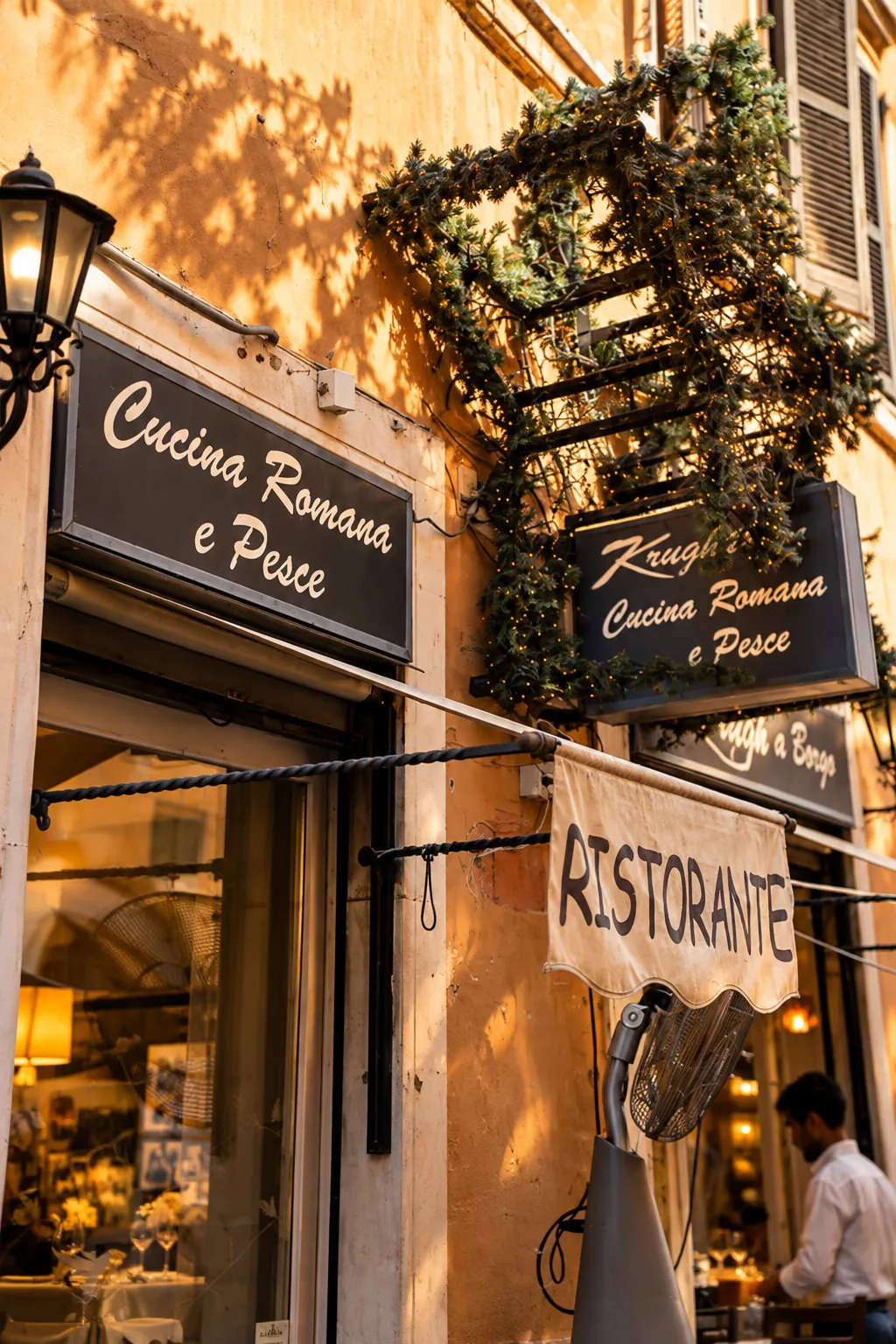
Carbonara, amatriciana, cacio e pepe and gricia are the four classic pastas of Rome. At Krugh da Amerigo, on Borgo Pio, they are on the menu every day under the name “Romani DOC”, from 13 to 15 euros.
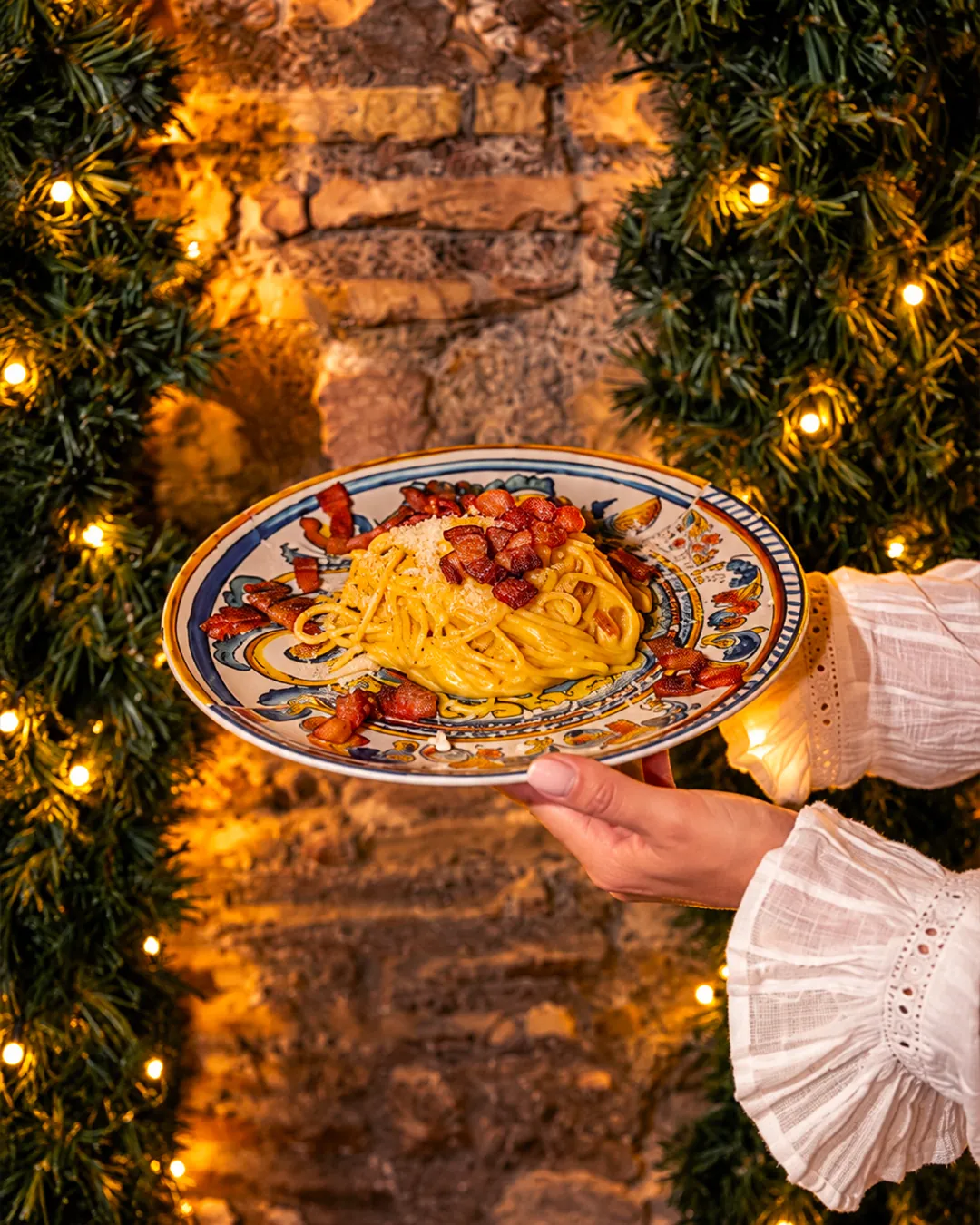
Carbonara
15 €
The Roman recipe calls for guanciale (cured pork cheek), eggs, pecorino romano and black pepper. No cream: the sauce is made by the eggs and cheese, away from the heat. On the menu: Spaghetti carbonara.
Amatriciana
15 €
Named after the town of Amatrice, in Lazio, and at home in every Roman trattoria: guanciale, tomato and pecorino. On the menu: Rigatoni amatriciana.
Cacio e pepe
13 €
Just two ingredients, pecorino romano and black pepper, bound with the pasta cooking water. It is the Roman pasta with no meat. On the menu: Tonnarelli cacio e pepe.
Gricia
14 €
Amatriciana without the tomato, or carbonara without the eggs: guanciale, pecorino romano and black pepper. On the menu: Rigatoni alla gricia.
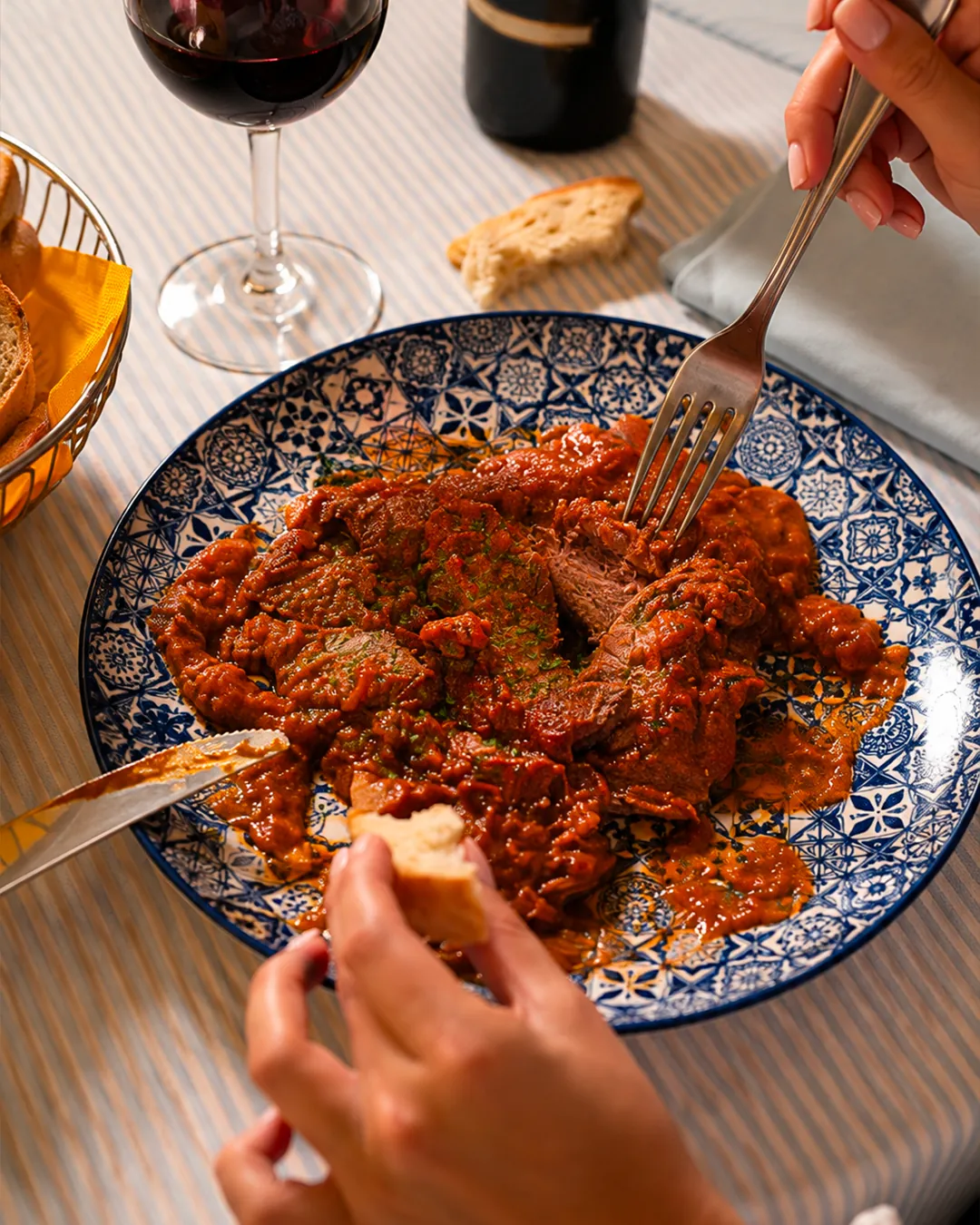
Roman main courses
After the pasta, the menu goes on with the “Romani DOC” main courses, most of them served with a side dish.
Saltimbocca alla romana
18 €Thin slices of veal with cured ham and sage.
Ossobuco alla romana
22 €Veal shank cut across the bone and slowly cooked.
Abbacchio scottadito
22 €Grilled lamb chops, eaten hot: scottadito means “burn your fingers”.
Pollo alla romana
16 €Chicken stewed the Roman way.
Carciofi fritti, alla giudia o alla romana
10 €Artichokes alla giudia are fried whole, in the Roman Jewish tradition; alla romana they are braised with garlic and herbs.
Questions about Roman food
What is the difference between carbonara and gricia?
The eggs. Gricia is made with guanciale, pecorino romano and black pepper; carbonara adds eggs, which form the sauce together with the cheese.
Is carbonara made with cream?
No. The Roman recipe has no cream: the creaminess comes from eggs and pecorino mixed into the hot pasta, away from the heat.
Which Roman pasta has no meat?
Cacio e pepe, made only with pecorino romano and black pepper. At Krugh da Amerigo it is tonnarelli cacio e pepe, at 13 euros.
Where can I eat carbonara near the Vatican?
Krugh da Amerigo is at Borgo Pio 127/128, a 5-minute walk from St Peter's Square, and serves spaghetti carbonara at 15 euros, every day from 10:00 to 23:30.